
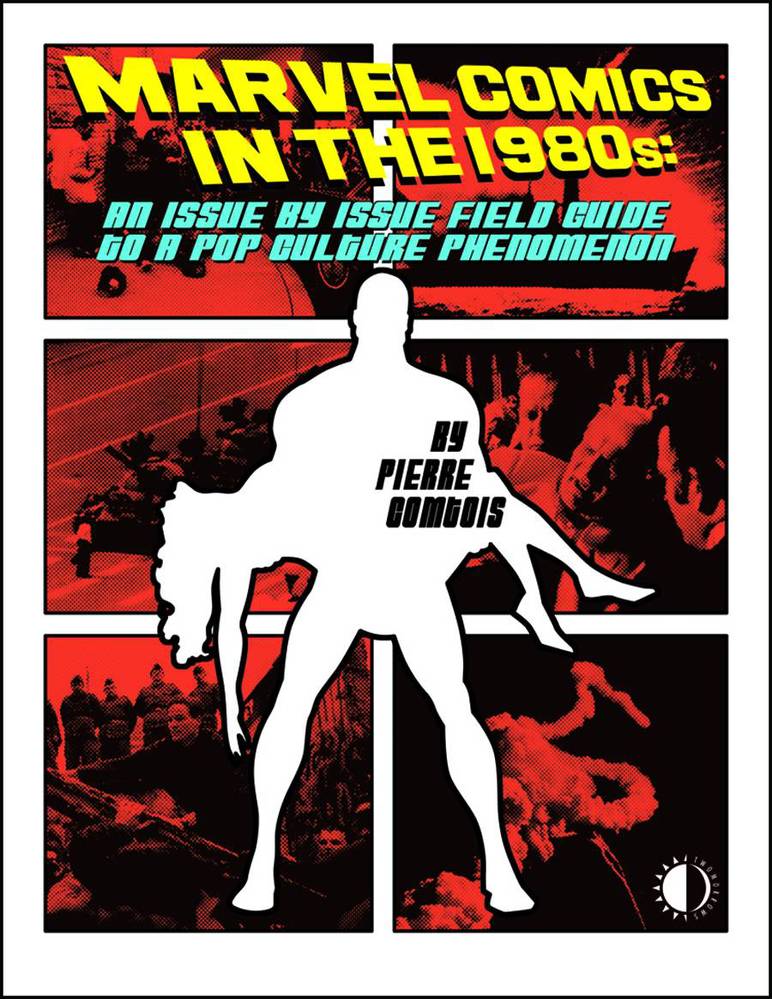
| Title: Marvel Comics in the 1980s (2014) Author: Pierre Comtois Publisher: TwoMorrows Publishing Book jacket: Marvel Comics in the 1980s, covering the pop culture phenomenon on an issue-by-issue basis! Joe says: Marvel Comics in the 1980s is less of a field guide and instead resembles a cranky blog. There is no real historical depth, only super-slanted bias. |
Beauty, taste, and opinion are subjective. Always have been. Nobody’s required to salute an author’s flag merely because he planted it in the dirt. But Marvel Comics in the 1980s, Pierre Comtois’ self-described “pop culture field guide,” doesn’t plant a flag so much as wave a white one while shouting at the sky. The book reads less like scholarship and more like a man who wandered into the wrong decade and took offense.
The warning signs were there long before page one. A Marvel book sporting the famous Crisis on Infinite Earths #7 pose—yes, a DC image—might be bold branding if the author were winking. Comtois isn’t. Then the introduction ends with a hearty, “If you disagree, write your own book.” Charming. Nothing builds confidence like an author preemptively slamming the door on discussion.
Comtois clearly loves Marvel’s Silver and Bronze Ages. Good on him. There are a lot of fantastic, enjoyable tales from those years. But his affection stops cold once the calendar flips to 1980. From there, the tone shifts from historian to doomsayer. Entire storylines are treated as cultural vandalism, creators as saboteurs, and, at one point, he even declares “RIP Marvel.” Why, Mr. Comtois, write an entire book about a decade you publicly despise? That’s the comic-book equivalent of a Star Trek purist writing a heartfelt memoir about the canon-ignorant Discovery – you know, the show where the main character was Spock’s … sister? Right.
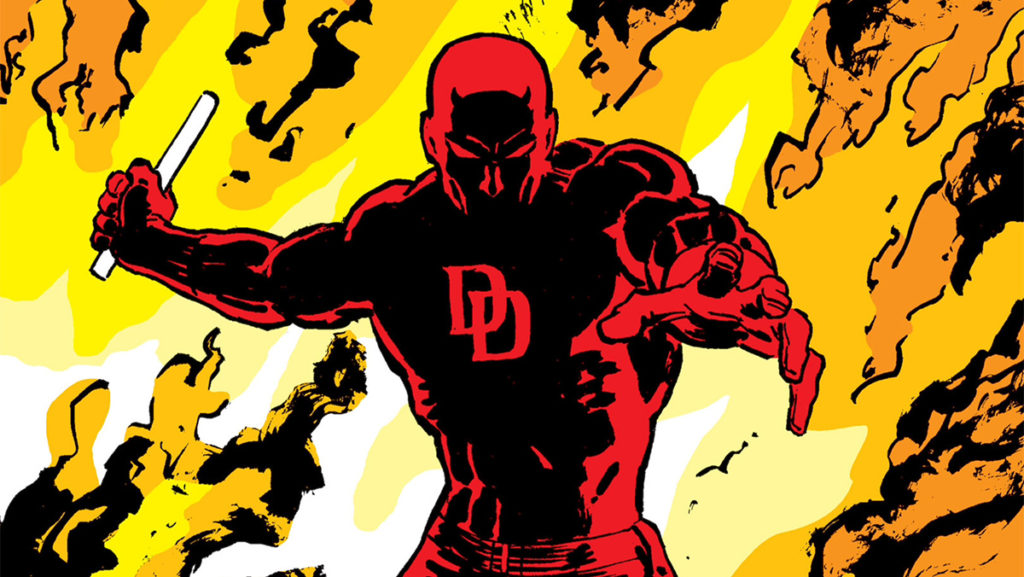
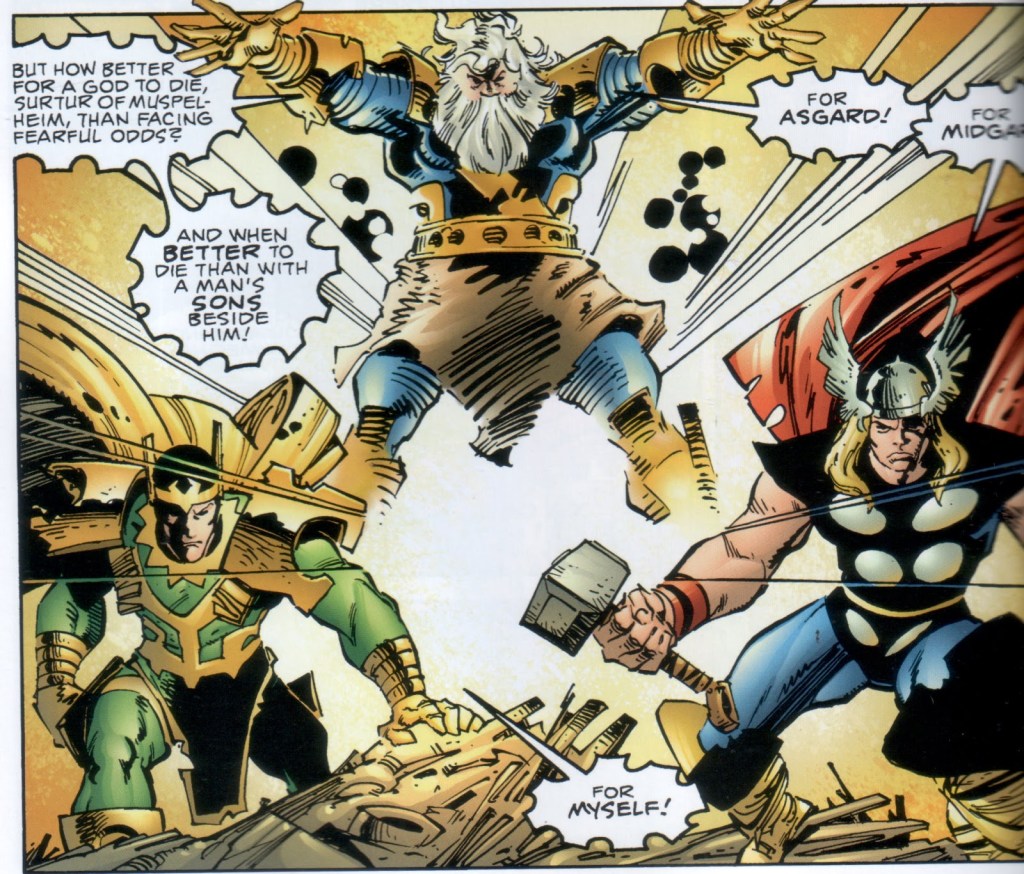
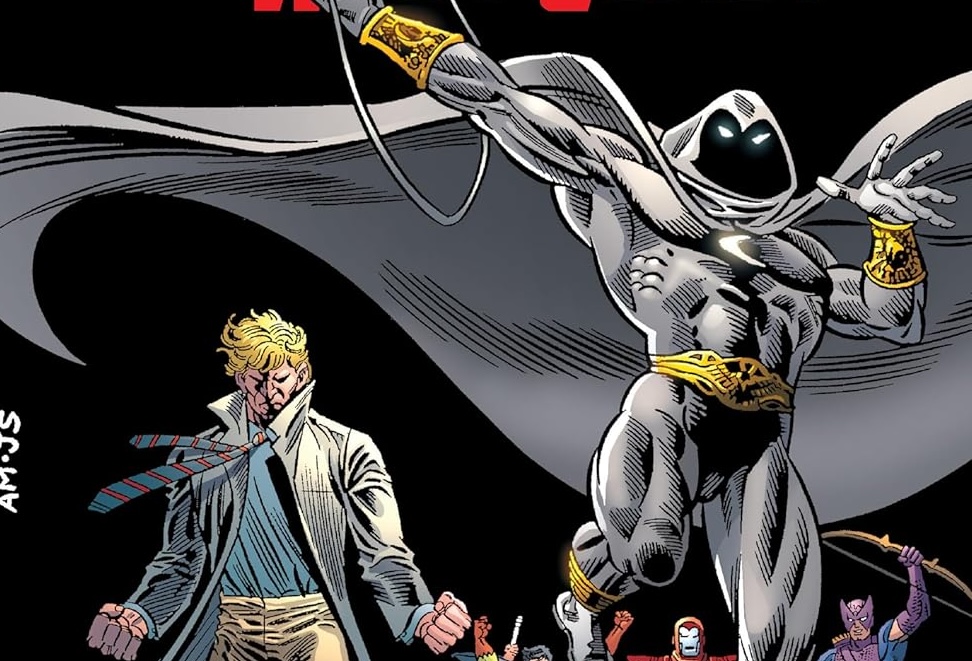
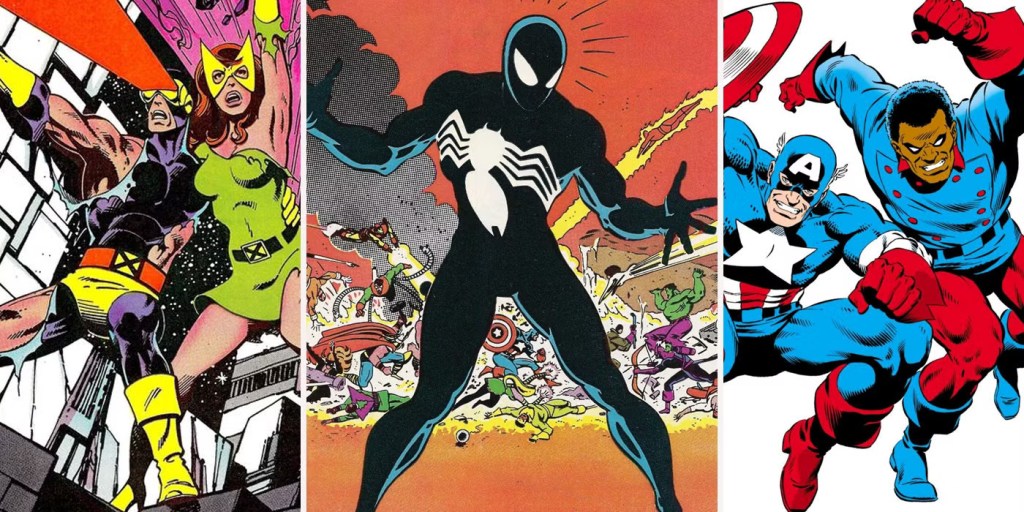
He does praise a few creators. Very few. Frank Miller. John Byrne. The Stern/Buscema/Palmer run on Avengers. And curiously… ROM. Then comes the real list: the things he objects to. And brother, that list is as infinite as the hunger of Galactus. Ready? The X-Men (unless Byrne is present). Nearly every major woman character—especially She-Hulk, Wasp, and Captain Marvel Monica Rambeau. Walt Simonson’s art. Walt Simonson’s Thor. Anyone’s Thor that isn’t Lee/Kirby or Jurgens/Romita. Art Adams. Todd McFarlane. Moon Knight. Hawkeye. Hank Pym. Paul Ryan. Bob Layton. Micheline/Romita’s Iron Man. And, for reasons never logically explained, Dave Gibbons’ artwork on Watchmen – a book that is, again, not Marvel.
By this point, Marvel Comics in the 1980s stopped being a field guide and instead resembles a cranky blog posted and hashtagged in a single afternoon. The absence of editorial structure is startling for a TwoMorrows publication, a company usually known for meticulous, fan-focused research. This was a huge lapse of editorial judgement on their side.
The subtitle promises “An Issue-by-Issue Field Guide to the Pop Culture Phenomenon.” Even that is incorrect. There are no groupings by theme or year or creator. Rather, there is a loose shuffle of personal favorites—Daredevil, Fantastic Four, Avengers, ROM—interspersed with point-blank rants about Claremont’s X-Men, the ascent of McFarlane becoming the “downfall of society,” and a drive-by dismissal of Walt Simonson’s legendary Thor run.
Whole swaths of the decade simply vanish. Licensed titans like Star Wars and G.I. Joe, both best-sellers? Ignored. Rhodey’s ground-breaking tenure as Iron Man? Gone. The New Defenders, Cap being replaced, Spidey team-ups, Power Man and Iron Fist, the Thing’s solo book, Excalibur? Off the map entirely. This is less a field guide and more an illuminated manuscript of selective memory.
Comtois also avoids real dates, replacing them with self-invented “eras” like Early, Grandiose, Consolidation. That may look clever in the margins of a notebook; in print, it is simple buffoonery. And then there’s his Comics Code fetish. Every time an issue dares to be violent or sensual, Comtois clutches the pearls. He cites non-CCA-approved comics like they’re procedural violations at a tribunal. What goes unmentioned is that the Comics Code Authority (the CCA) was a mostly voluntary, half-hearted system whose relevance evaporated before the 80s ended. Former Marvel staffer Scott Edelman has made this historical point through his excellent – and highly recommended – Why Not Say What Happened? podcast. Check it out.
What makes all this more baffling is that the 1980s were one of Marvel’s most transformative decades. Walt Simonson re-forged Thor into an epic of tragedy and triumph. Frank Miller reinvented Daredevil with cinematic precision. O’Neil and McDonnell tackled addiction, recovery, and race through Iron Man. Secret Wars reshaped the business model. Licensed books expanded universes in inventive ways. The rise of comic shops changed distribution forever. Comtois mentions none of it with real historical depth, only super-slanted bias.

Clearly, Comtois prefers the heroes and stories of yesteryear. When good guys always won and evil wore ridiculous analogous colors. When comics were “Still Only 25¢!” and could be found on the spinner rack in every drugstore, newsstand, and supermarket. Again, good on him. Really. Nostalgia is a good thing and those POW-WHAM tales are fun to read. The real issue here is that Comtois is not Gen X. He did not come to age in a period where nuclear annihilation felt like it was the press of a button away. Dismissing an entire generation’s cultural climate—the Cold War, MTV, violent action cinema, the rapid evolution of art and storytelling—as inconsequential? That’s not critique. That’s avoidance.
Even the ending is abrupt. The book simply stops, landing on Avengers Spotlight #22—a footnote of an issue—as though someone yanked out his typewriter ribbon mid-sentence. An odd finale for sure: unsatisfying, unfinished, and lacking. Yet, a fitting metaphor for this entire book. ‘Nuff said.




 Read @ Joe’s
Leave a comment