
| Title: All Is Fine in ’89 (2025) Director: Matthew Lupis Writer: Matthew Lupis Studio: Westona IMDb Plot: With the backdrop of the Berlin Wall being torn down, the senior students – and even teachers – at Romano High are prepping for the last field party of the decade – and for some, the last party of their lives. Joe Says: This is Better Off Dead if filmed by Oliver Stone. |
The Gen X teen drama All Is Fine in ’89 proudly checks every box on the 80s high school SAT test: drinking out of a paper bag, cutting class, hormonal fantasy sequences, closeted homosexuality, teenage pregnancy, and that ever present fog of cigarette smoke hanging in the hallway like a low budget John Hughes dream sequence. Set at the fictional Romano High in New Jersey, though filmed in Ontario, writer-director Matthew Lupis and the Westona team nail the period details. The “Jim Florio for Governor” signs are a deep cut that deserve massive applause. The texture feels totally awesome. The vibe feels rad. But while the film nods to Sixteen Candles and Fast Times at Ridgemont High, it ultimately swerves into something far darker, missing the emotional buoyancy of Hughes, the comedic precision of Amy Heckerling, and yes, even the Jersey bite Kevin Smith would have injected.
The story loosely tracks four students and two teachers over a single November day in 1989, coinciding with the fall of the Berlin Wall. History shifts on a global scale, yet the students of Romano High are far more concerned with that night’s Field Day party. Dean (Dylan Hawco), resident golden boy, skips class to drink and smirk his way through consequences. Mark (Adam Lupis) wrestles with a bully and with feelings he cannot safely articulate. Cole (Tom Keat), that bully and star athlete, projects locker room bravado while quietly unraveling. Linda (Dani Romaro) carries a sadness that feels too heavy for one afternoon. Even the faculty is adrift. Mr. Parker (Damien Gulde) radiates defeat, while Marie Applewood (Shelby Handley) presents polished control that masks a troubling, and potentially dangerous, fixation. This is Better Off Dead if filmed by Oliver Stone.
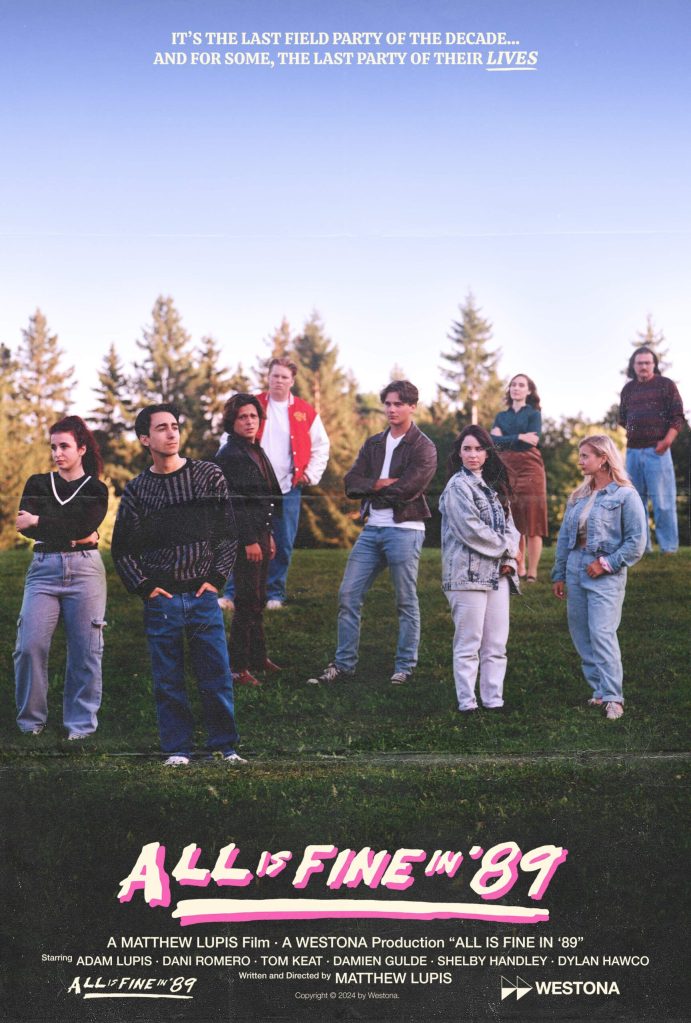
Lupis directs with a steady hand; less MTV chops, more Spike Lee imperativeness. The cinematography and editing avoid flash, allowing performance to drive the film. And that choice works. Romaro delivers a raw, grounded portrayal of teenage anguish. Hawco has the easy charm of someone who knows exactly how to weaponize a smile. Keat leans into his role with gusto, channeling a young Donal Logue energy with varsity swagger. The electronic score by André Gámez evokes an analog synth mood, with more than a passing nod toward the Stranger Things soundtrack. What is conspicuously absent, however, are era-specific needledrops. For a film brewed in 1989, the lack of recognizable musical notes feels like a mixtape missing its Top 40 track.
DJ hype aside, the film slips with its tonal calibration. Death, sexual confusion, betrayal, and emotional implosion stack up all too rapidly. Hey, Gen X had its share of angst, but it was rarely this concentrated. Lupis seemingly decides to condense an entire senior year into a single afternoon. Heckerling proved decades ago that teen comedy and teen tragedy can share the same hallway. Here, the balance tilts heavily toward despair; a few well placed moments of levity could have deepened the impact rather than undercut it.
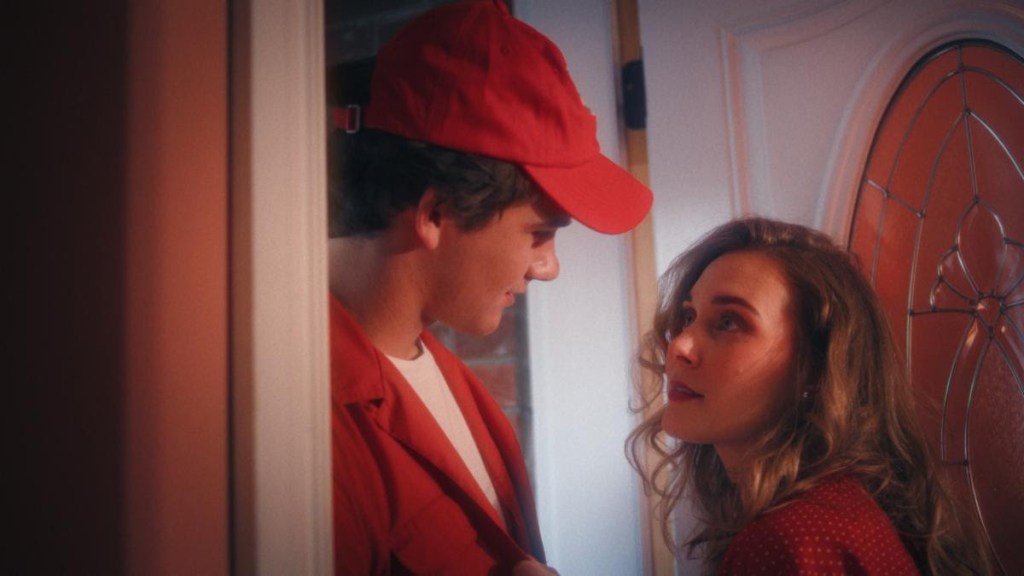
The finale compounds that imbalance. The film opens with clever faux 80s commercials and a news report framing a communal moment, but never circles back to those devices. When the 90s arrive, complete with George Bush optimism filtered through rose-colored lenses, there is an opportunity to comment on the artificial sheen of both decades. After all, the 80s were as artificial as acid washed jeans. Yet Lupis’ resolutions were as wanting as a Peter Gabriel return to Genesis.
Still, All Is Fine in ’89 is an ambitious, performance driven indie that captures the anxiety of standing on the edge of adulthood while the world rearranges itself. Lupis understands the emotional volatility of the era, even if he turns the dial too far. With a tad more tenor and a stronger structural bookend, this film could graduate from nostalgic homage to an enduring trendsetter.
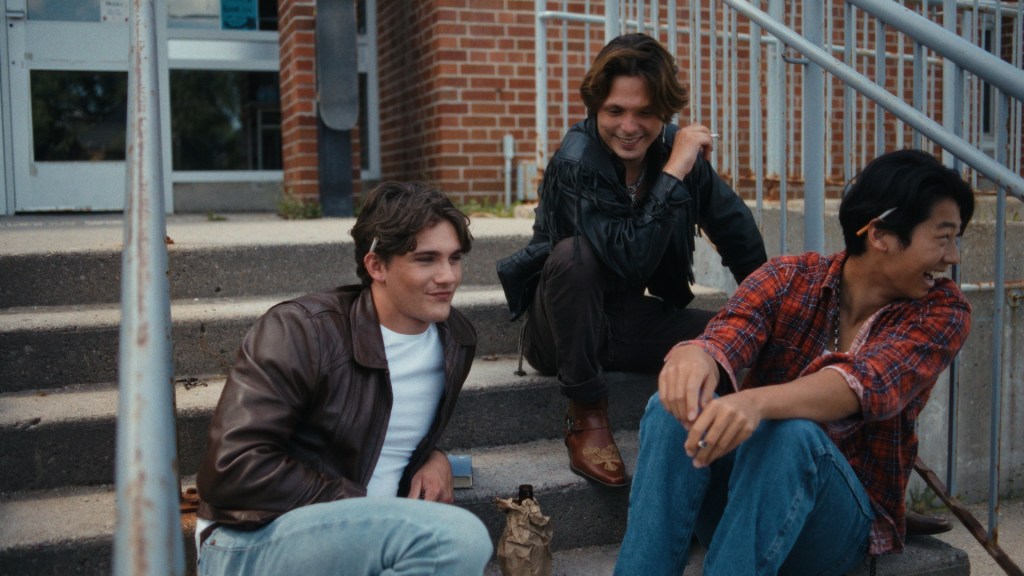
For Gen X viewers, All Is Fine in ’89 plays like flipping through an old yearbook and remembering the smell of Aqua Net and cafeteria pizza. Not everything was fine in ’89. But the feeling of it is still potent. And sometimes that is enough. Especially for a story set in Jersey.





 Read @ Joe’s
Leave a comment