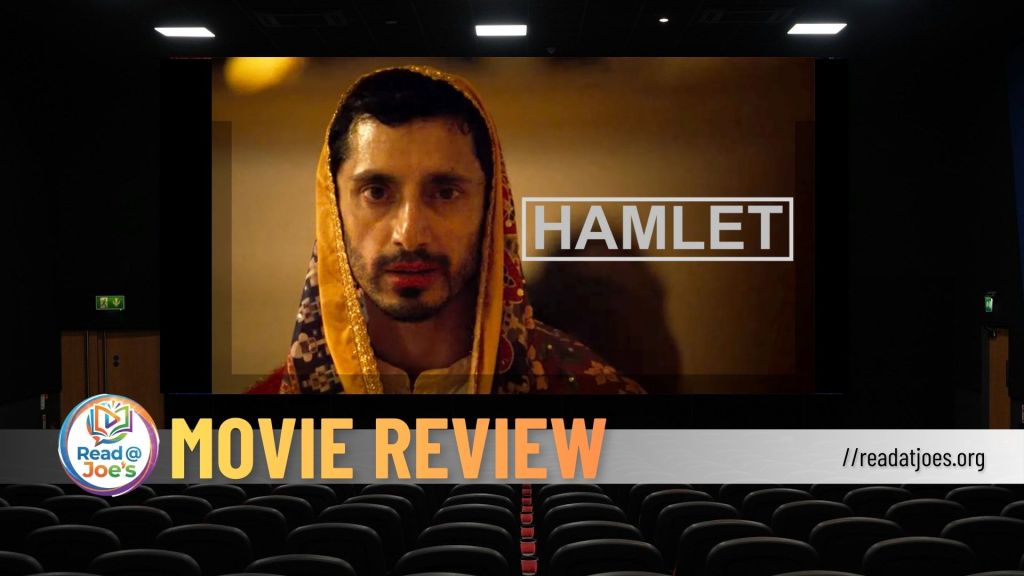
| Title: Hamlet (2025) Director: Aneil Karia Writer: Michael Lesslie // William Shakespeare Studio: Confluential Films // Waypoint Entertainment // Vertical IMDb Plot: Hamlet comes home for his father’s funeral and finds his uncle Claudius marrying his widowed mother Gertrude. His father’s ghost reveals Claudius murdered him, leading Hamlet toward revenge and introspection. Joe Says: Visually and atmospherically, Hamlet is immersive, even hypnotic. But the play’s the thing, and here, too much has been left in the wings. Aneil Karia’s version is less feast, more tasting menu. |
Riz Ahmed and Aneil Karia’s Hamlet is a bare-bones adaptation of William Shakespeare’s arguably most prolific and longest work, trimmed down for a modern, attention-splintered audience. Gone is the brother-in-arms friendship of Horatio, while Ophelia’s presence is reduced to a faint echo, leaving Ahmed’s prince as a heightened portrayal of the suffering loner. His wide-eyed intensity reveals both artistic sincerity and emotional fragility, yet the heavily-redacted narrative plays as either frustratingly choppy for purists or incomplete for newcomers expecting a mid-credits zinger.
Set within modern-day London’s South Asian community, the film carries the grime of an early season of Luther, counterbalanced by Shakespeare’s language, and delivered with reverence and rhythm. Ahmed’s Hamlet returns to Elsinore, reimagined here as a family-run corporate empire, to mourn his father and confront his mother’s fast-tracked nuptials to his uncle, Claudius, who, of course, is responsible for the death at hand.
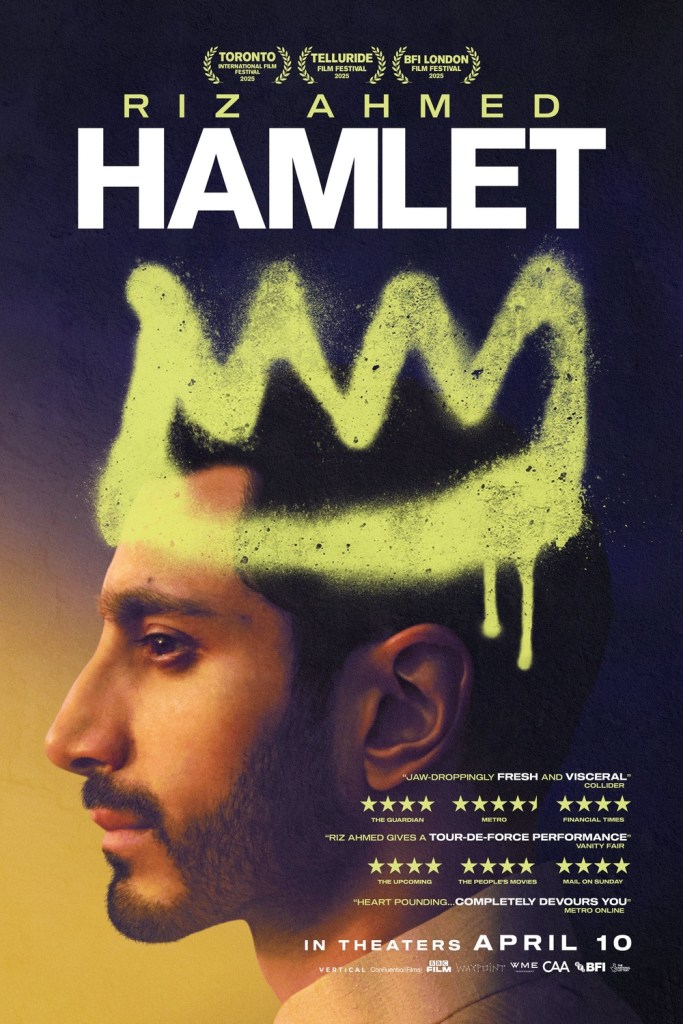
The bones of the original tragedy remain, but much of the political intrigue and psychological chess match has been stripped away. What’s left is a streamlined march from betrayal to consequence, with a pleasant touch of Bollywood in the middle. Alas, none of the play’s deep intricacy hits within Michael Lesslie’s (who did an interesting translation of MacBeth with Michael Fassbender in 2015) screenplay.
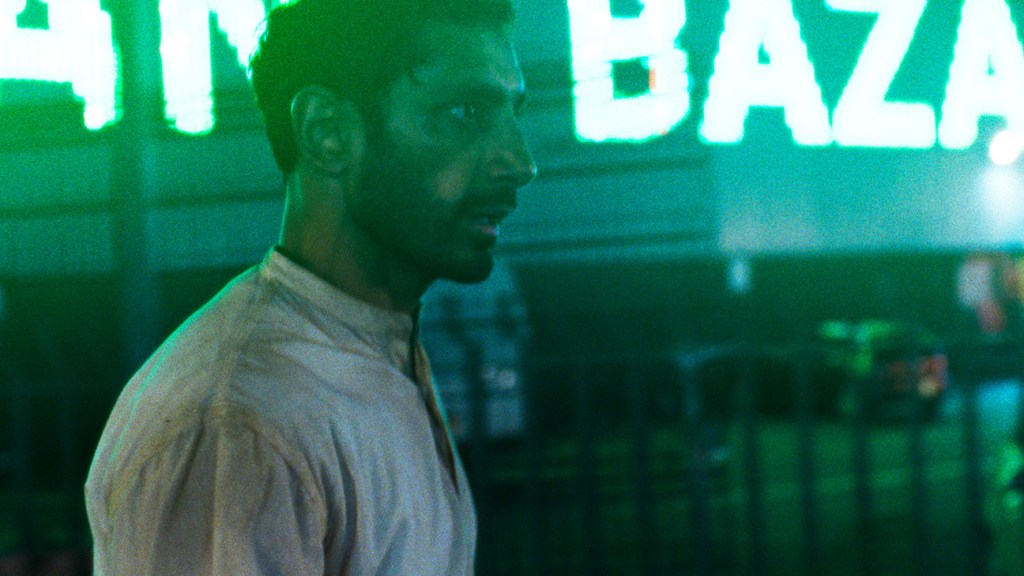
Ahmed is magnetic. His soliloquies oscillate between under-his-breath mumbling to raw bursts. However, his performance of the famous “To be or not to be” speech – nearly shouting while driving a car in the wrong lane – is downright compelling.
Yet this Hamlet is not cunning. He is scared, and sad, and lonely. He is completely unmoored; rarely in control of the revenge he means to orchestrate. Even pivotal moments, such as the murder of Polonius (the wonderful Timothy Spall), unfold strangely, with Claudius (Art Malik) actually helping Hamlet in a conspiratorial gesture.
Which is … odd.
Karia’s direction, however, is undeniably compelling. The film carries the polished grit of an A24-style indie, with cinematographer Stuart Bentley shifting between frenetic POV shots and composed, elegant frames. Maxwell Sterling’s score hums beneath the surface, building tension with a deliberate pulse. Visually and atmospherically, Hamlet is immersive, even hypnotic.
But the play’s the thing, and here, too much has been left in the wings. The absence of Horatio, the diminished sense of political stakes, and the omission of figures like Fortinbras and even poor Yorick (alas), leave the story feeling more like a striking prelude than a complete tragedy. Compared to the grand lineage of adaptations, from Laurence Olivier’s best picture classic to Kenneth Branagh’s exhaustive epic, Karia’s version is less feast, more tasting menu.

Still, there is something undeniably engaging in this ambitious production. Karia’s Hamlet reinterprets, compresses, and stylizes. Hamlet may not satisfy traditionalists, but is a visually bold, albeit imperfect, experiment. Or, to borrow from the Bard: it is a version that “doth protest too much, methinks,” yet remains intriguing enough to warrant the watch. Ay, there’s the rub.

Alas, this review is available on Cinefied, a site of infinite jest, of most excellent fancy.

 Read @ Joe’s
Leave a comment