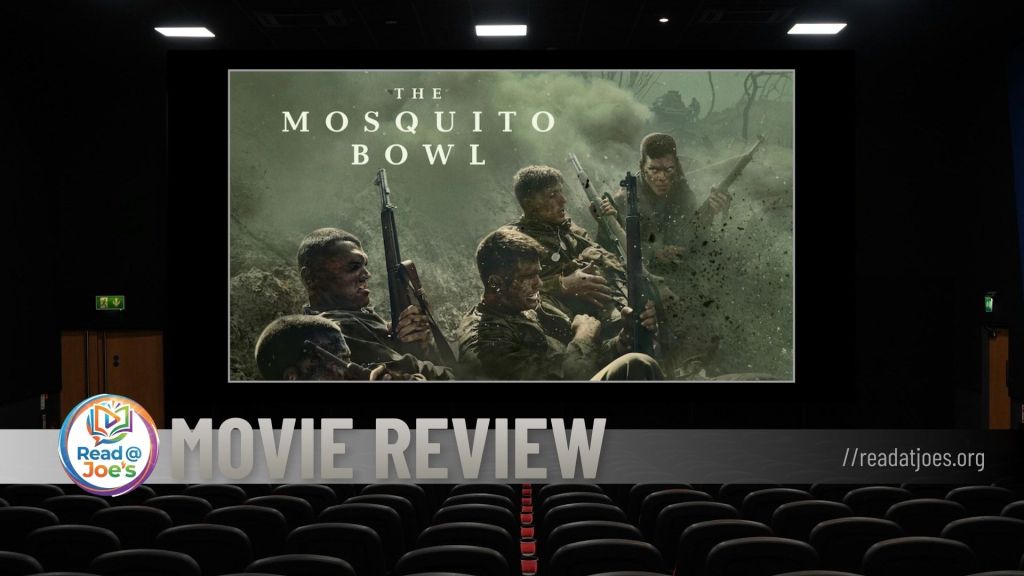
| Title: The Mosquito Bowl (2026) Director: Peter Berg Writer: Peter Berg // Mark L. Smith // Buzz Bissinger Studio: Imagine Entertainment // Netflix IMDb Plot: After Pearl Harbor, four star college footballers join the Marines. Before facing Okinawa’s invasion, they participate in a historic game with legendary players – for many, their final match. Joe Says: Powerful, impressive, and thoroughly entertaining, The Mosquito Bowl is much more than a football movie with a war-film detour. |
The late, great George Carlin once joked about the similarities between war and football: the strategies, the camaraderie, the leadership, the terminology, even the bloodlust. The bit is a funny one and worth looking up. Director Peter Berg, however, might not be quite so genial about the comparison. His latest film, The Mosquito Bowl (debuting on Netflix in time for that most important of football holidays: Thanksgiving) certainly connects the thrill of the game with the deadly consequences of war. But Berg makes one distinction abundantly clear: war is hell. Football, for all its bruises and glory, is still just a game. Put the two together, though, and you have one hell of a good movie.
Based on the true story chronicled in Philadelphia native Buzz Bissinger’s book of the same name, The Mosquito Bowl recounts a remarkable football game played on Christmas Eve, 1944, between two Marine Corps regiments stationed on the mosquito-infested island of Guadalcanal. Intended as a morale booster, the contest boasted a collection of talent: sixteen Marines who had played college football, including several former stars, and one who had been drafted into the pros. Berg’s film focuses on four of these players, whose athletic accomplishments would soon be overshadowed by their service – and in some instances sacrifice – in the bloody Battle of Okinawa.
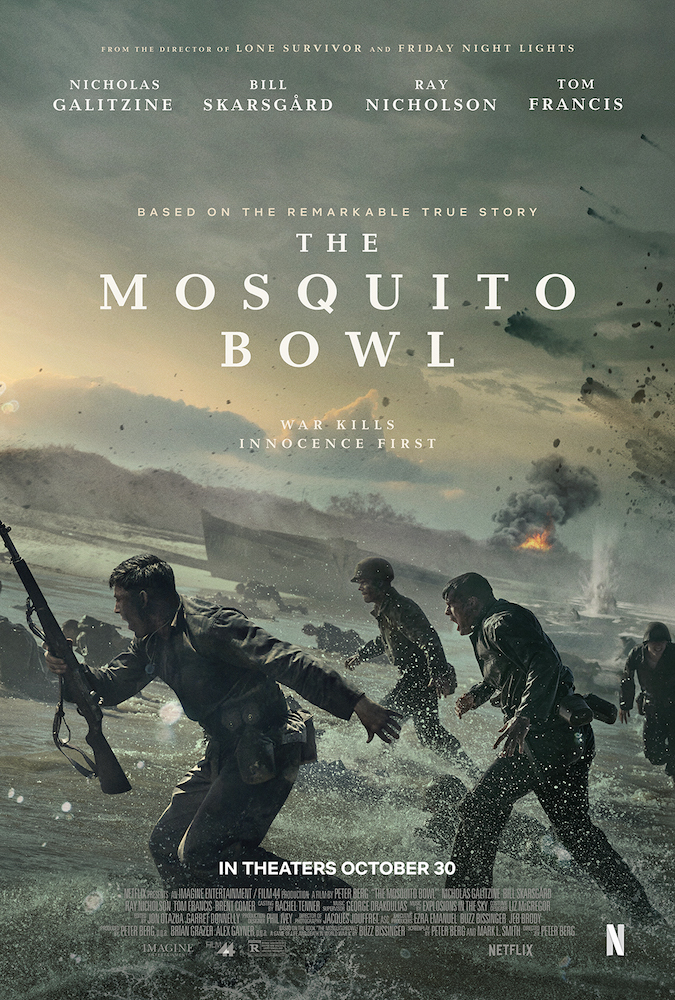
The movie follows the usual beats that make both sports biopics and war dramas familiar. Rivalries on the college gridiron give way to brotherhood-in-arms. But Berg and co-writer Mark Smith (The Dog Stars) never lose sight of the talent nor the notoriety of those four. Even the Parris Island drill instructors give them sly notice. Until Tarawa.
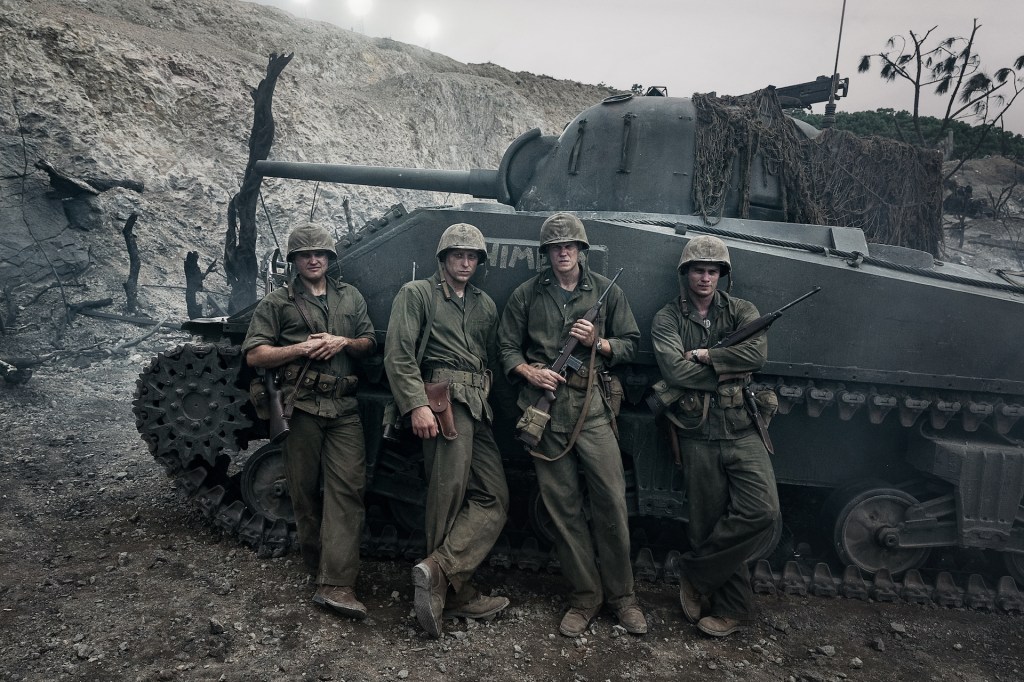
Berg’s depiction of the November 1943 Battle of Tarawa is a stunning piece of filmmaking. Working with cinematographer Jacques Jouffret, he unleashes a volley that seems to take its marching orders from the opening assault in Steven Spielberg’s Saving Private Ryan. The sequence is brutal, chaotic, and genuinely nerve-racking, a heart-pounding assault that puts the viewer right in the middle of the carnage. The scene is a technical and emotional knockout, and one of the film’s most memorable achievements.
In fact, the Tarawa sequence nearly steals the show. The actual Mosquito Bowl is a welcome burst of fun and levity, but the looming horror of Okinawa casts a long shadow over the festivities. There’s an intriguing structural choice at work here, almost as if Berg and Bissinger, who previously collaborated on Friday Night Lights and happen to be cousins, looked at the concluding football game in M*A*S*H and decided to make that kind of moment central to an entire story. The result is a film in which the game matters, but the lives behind it matter considerably more.
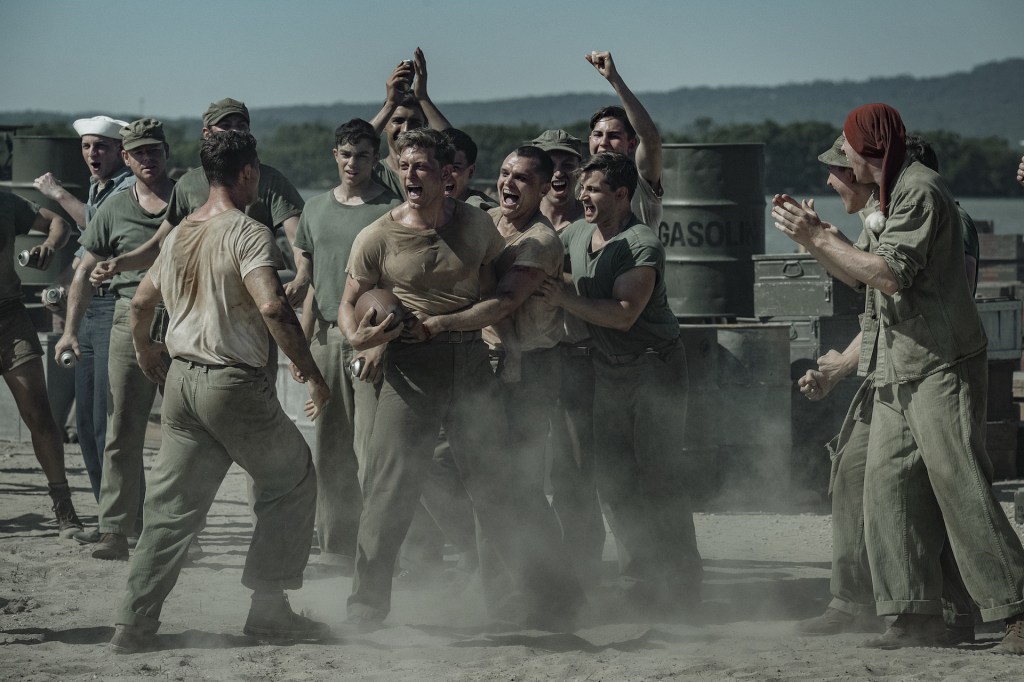
The cast is excellent across the board. Bill Skarsgård and Tom Francis play former University of Wisconsin stars, with Skarsgård particularly effective in a role that lets him show off his dramatic skills without disappearing beneath layers of creature-feature makeup. Nicholas Galitzine brings a sturdy, romantic quality to John McLaughry, while Ray Nicholson (yes, the son of that Nicholson) makes an impression as Tony Butkovich, the gifted athlete who gave up a promising professional football career to serve his country. Each brings a distinct personality to the ensemble, helping these young men feel like more than names on a roster or statistics in a history book.
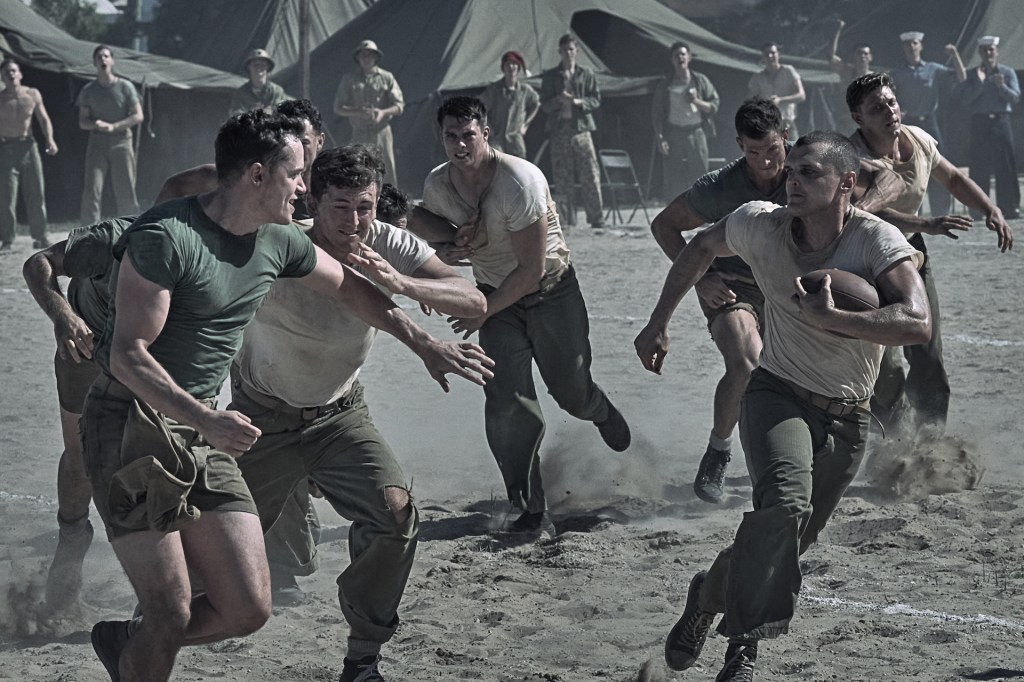
Berg handles the material with a confident eye for both spectacle and intimacy. He builds tension around the action, skillfully incorporates historical footage, and opens each act with an image of Earth from orbit – an effective visual reminder of the larger world surrounding these very human stories. Berg understands that scale, and he gives the film room to appreciate both the enormity of war and the individual lives caught in its path.
Powerful, impressive, and thoroughly entertaining, The Mosquito Bowl is much more than a football movie with a war-film detour. Berg delivers the spectacle, but never loses sight of the humanity underneath it. The game may have been played for morale, but the film is a powerful reminder of what was really at stake. Expect The Mosquito Bowl to be a contender on plenty of year-end lists.





Leave a Reply