| Title: Primetime (2026) Director: Lance Oppenheim Writer: Ajon Singh Studio: A24 IMDb Plot: In 2006, To Catch a Predator host Chris Hansen sets out to make television history. Joe Says: Primetime is a timely critique of modern-day culture but, surprisingly, the story’s quieter moments overshadow its bombastic ones. |
Director Lance Oppenheim announced himself with Some Kind of Heaven, his Darren Aronofsky-produced documentary that pulled the walker wheels off the Florida retirement community, The Villas. So it’s hardly surprising that his narrative feature debut, Primetime, comes with an almost unnervingly authentic documentary feel. This time, Oppenheim turns his camera toward the mid-aughts television phenomenon To Catch a Predator and its troubled host, Chris Hansen. The result is a very A24 kind of movie: strange, stylish, uncomfortable, and just a little bit crazy. Primetime is a timely critique of modern-day culture but, surprisingly, the story’s quieter moments overshadow its bombastic ones.
If To Catch a Predator doesn’t immediately jump to the top of your internal Letterboxd-queue, it is easy to understand as everyone else in America was too busy trying to figure out what the hell was happening on Lost. The NBC series ran from 2004 to 2007, turning hidden-camera sting operations into must-see TV. Oppenheim and screenwriter Ajon Singh, drawing on Luke Dittrich’s reporting, use the show’s rise and spectacular implosion as the backdrop for a fictionalized account of Hansen (Robert Pattinson). A full-on A24 fever dream, Primetime is fascinating to watch, even when its leading man isn’t quite as compelling as the rest of world unraveling around him.
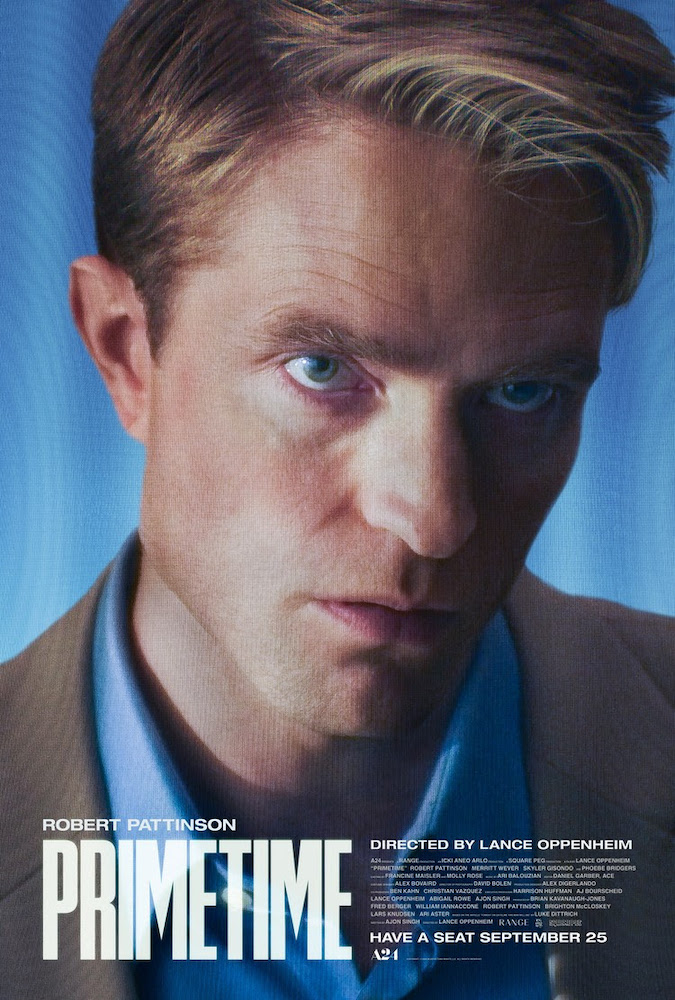
The film follows Hansen right from when the show explodes until the time it implodes, with the suicide of Texas district attorney Bill Conradt (a remarkable Alex Winter). During it all, Hansen rides a rollercoaster of fame, self-doubt, marital infidelity, and undiagnosed depression. Pattinson is clearly having a grand old time with the role. He brings plenty of twitchy energy, calculated charm, and barely contained lunacy to the role. But here’s the thing: Hansen’s descent into madness never quite becomes a compelling centerpiece of the film.
Fortunately, the supporting cast is ready to pick up the pieces. And steal a few scenes while they’re at it.
Playing Dan Plum, better known as “Decoy Dan,” Skyler Gisondo is the film’s secret weapon. Dan is an aspiring actor recruited to pose as an underage boy in the show’s sting operations, hoping the gig will land him with a SAG card and something resembling a steady paycheck. Instead, he finds himself pulled into Hansen’s wobbly orbit. Gisondo is terrific, making Dan believable, funny, and vulnerable. Oppenheim captures the delicious irony of Hansen’s star beginning to fade just as Dan’s is starting to rise. Gisondo is the real MVP of Primetime.

Merritt Wever is equally fascinating as Andie Bender, the show’s sharp producer and Hansen’s behind-the-scenes fixer. But as the moral compromises pile up, Wever reveals with her performance that she might need a little fixing herself. Yet easily, Wever owns the room.
Matthew Maher rounds out the principal players as Xavier, whose obsession with hunting down predators blurs the already questionable boundary between vigilantism and entertainment. Maher terrifically goes all wide-eyed with the hunt. Alex Winter, meanwhile, makes a memorable impression as Conradt, bringing an unexpected measure of humanity to a character caught in the machinery of public exposure.

Oppenheim’s documentary background is on display throughout. The period details, the awkwardly intimate camera work, the grainy television aesthetic, and the unsettling sense of voyeurism all contribute to the film’s peculiar authenticity. The whole thing has the uncomfortable appeal of watching a cultural train wreck unfold in real time.
Ultimately, Primetime is an intriguing look at the intersection of television, celebrity, and America’s seemingly endless appetite for public humiliation. Pattinson delivers an entertaining performance, even if his character’s psychological collapse doesn’t quite land with the force intended. The real juice, however, comes from Wever and Gisondo, whose characters give the story its most fascinating human dimensions. Pattinson may be the headline act, but Gisondo and Wever are the reason to stay tuned. And in a movie about chasing ratings, that’s one hell of a plot twist.








Leave a Reply